
When people talk about being healthy, most think only about eating right or exercising. But true health goes deeper than that — it’s about balance. This is where the Health Triangle comes in. It’s a simple yet powerful model that helps us understand how to live a well-rounded, healthy life.
Definition of the Health Triangle
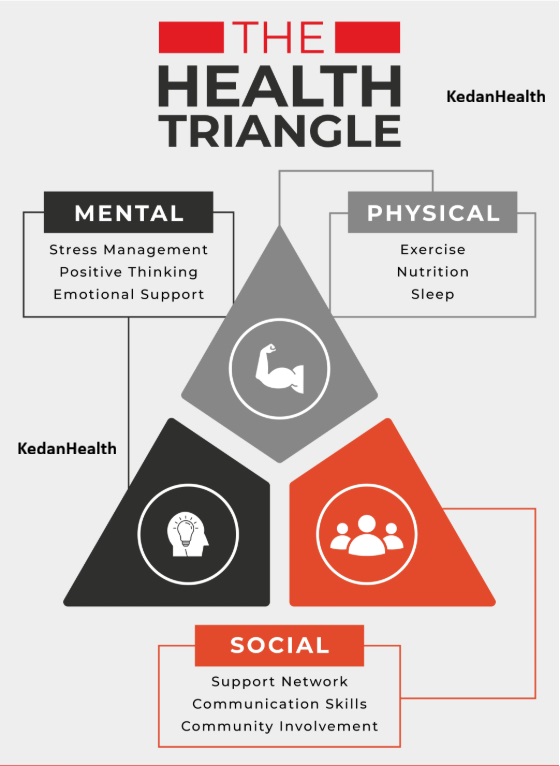
The Health Triangle, also called the Wellness Triangle, is a visual representation of three key components of health:
-
Physical Health
-
Mental (or Emotional) Health
-
Social Health
Each side of the triangle supports the others. When one side is weak, the entire triangle becomes unbalanced — leading to poor overall health. Maintaining balance among these three areas is the key to lifelong wellness.
1️⃣ Physical Health: Taking Care of Your Body
Physical health is the foundation of the health triangle. It involves how well your body functions and how you care for it.
To maintain good physical health:
-
Eat balanced meals with fruits, vegetables, proteins, and whole grains.
-
Exercise regularly — even 30 minutes of daily activity helps.
-
Get enough sleep (7–8 hours per night).
-
Avoid harmful habits like smoking, drug use, or excessive alcohol.
-
Stay hydrated and maintain good hygiene.
When your physical health is strong, your body has more energy and a stronger immune system — which also helps improve your mental and social health.
2️⃣ Mental or Emotional Health: Caring for Your Mind
Mental health (sometimes called emotional health) focuses on how you think, feel, and cope with daily challenges.
Good mental health includes:
-
Managing stress in healthy ways
-
Expressing your emotions instead of bottling them up
-
Building self-esteem and confidence
-
Asking for help when you feel overwhelmed
To strengthen your emotional health:
-
Practice mindfulness or meditation
-
Talk to trusted friends or counselors
-
Engage in hobbies or creative activities
-
Focus on gratitude and positive thinking
Balanced mental health allows you to make better decisions, maintain healthy relationships, and stay motivated in life.
3️⃣ Social Health: Building Strong Connections
Social health refers to how you interact with others — your ability to build and maintain positive relationships.
It’s not just about having friends, but about feeling connected, supported, and valued in your community.
Ways to improve your social health:
-
Spend quality time with family and friends
-
Communicate openly and respectfully
-
Join clubs, volunteer, or participate in community activities
-
Resolve conflicts peacefully
-
Show empathy and kindness to others
Strong social connections boost happiness and reduce stress, completing the balance of your health triangle.
Also read: What Are EVS Hospital Jobs? An Environmental Services in Healthcare
⚖️ Why Is the Health Triangle Important?
The health triangle reminds us that good health is not one-dimensional. If you only focus on your body but ignore your emotions or relationships, your overall well-being suffers.
For example:
-
A student who studies too much and skips sleep (physical imbalance) may feel anxious (mental imbalance).
-
A person who isolates themselves socially may struggle emotionally, even if they eat well and exercise.
By keeping all three sides balanced, you build a stronger foundation for a happier, healthier life.
How to Maintain a Balanced Health Triangle
Here are a few daily habits that can help you keep your health triangle strong:
-
Exercise regularly and eat balanced meals.
-
Get enough sleep and manage your time wisely.
-
Express your feelings and practice gratitude.
-
Stay connected with family and friends.
-
Avoid negative coping habits and practice self-care.
Remember, wellness isn’t about perfection — it’s about balance.
Final Thoughts
The Health Triangle is more than a school concept — it’s a lifelong guide for achieving total wellness. By paying attention to your physical, mental, and social health, you can create balance and live a fulfilling life.
Start today by checking which side of your triangle needs improvement. With small, consistent steps, you can strengthen every area of your health and achieve lasting well-being.
Frequently Asked Question on Health Triangle
❓ What is a Health Triangle Project?
A health triangle project is a school or educational assignment that helps students understand the three main parts of good health: physical health, mental (emotional) health, and social health. These three parts form a triangle because they are all connected, and each one affects the others.
In a health triangle project, students are usually asked to:
-
Define the three sides of the health triangle
-
Give examples of each type of health
-
Explain how the sides work together
-
Show what happens when one side is weak
The project can be presented as a poster, chart, drawing, PowerPoint, or written report. The goal is to teach that true health is not just about the body, but also about the mind and relationships.
❓ What are Health Triangle Examples?
Health triangle examples show real-life actions or habits that support each side of the triangle.
Here are simple examples for each part:
-
Physical health examples
-
Eating balanced meals
-
Exercising regularly
-
Getting enough sleep
-
Drinking clean water
-
Visiting the doctor when sick
-
-
Mental (emotional) health examples
-
Managing stress
-
Thinking positively
-
Expressing feelings in a healthy way
-
Practicing relaxation or mindfulness
-
Asking for help when overwhelmed
-
-
Social health examples
-
Making and keeping friends
-
Communicating respectfully
-
Working well in a team
-
Supporting family members
-
Resolving conflicts peacefully
-
These examples help students understand that good health involves daily choices, not just avoiding illness.
❓ Why Is the Health Triangle Important?
The health triangle is important because it shows that health is balanced and connected. If one side of the triangle is weak, the other sides are affected.
For example:
-
Poor mental health can lead to physical illness
-
Weak social health can cause stress and loneliness
-
Poor physical health can affect mood and relationships
The health triangle teaches people that:
-
Being healthy is more than just exercising
-
Mental well-being is just as important as physical fitness
-
Strong relationships support overall health
Understanding the health triangle helps people make better life choices, manage stress, and live a more balanced and fulfilling life.
❓ What Are Mental Health Triangle Examples?
Mental health triangle examples focus on actions and habits that support emotional and psychological well-being within the health triangle.
Examples include:
-
Talking about feelings instead of bottling them up
-
Practicing self-care and relaxation
-
Setting realistic goals
-
Having a positive mindset
-
Seeking counseling or support when needed
Mental health affects how people:
-
Think
-
Feel
-
Handle stress
-
Make decisions
Good mental health helps improve physical health and strengthens social relationships, making it a vital part of the health triangle.
❓ What Are Health Triangle Social Examples?
Health triangle social examples refer to behaviors and relationships that help people connect positively with others.
Common examples include:
-
Spending quality time with family
-
Making friends and maintaining friendships
-
Showing kindness and empathy
-
Communicating clearly and respectfully
-
Participating in group activities or community events
Strong social health helps reduce stress, improve self-esteem, and support emotional well-being. When people feel connected and supported, they are more likely to maintain good physical and mental health.
❓ What Is the Mental Health Triangle?
The mental health triangle focuses mainly on the emotional and psychological side of health while still connecting to physical and social well-being.
It highlights:
-
Emotional balance
-
Healthy thinking patterns
-
Positive relationships
The mental health triangle shows that:
-
Mental health affects physical health
-
Emotional struggles can impact social interactions
-
Support from others strengthens mental well-being
By understanding the mental health triangle, individuals learn the importance of self-awareness, emotional control, and social support in maintaining overall health.